
FoodExpoConnect Blog
SeriesCompliance Deadlines 2026EU Organic Certification vs USDA Organic: Which One Do You Need for Export?
Compare EU Organic and USDA Organic certification standards across produce, grains, dairy, meat, and processed foods to choose the right certification for your export markets.
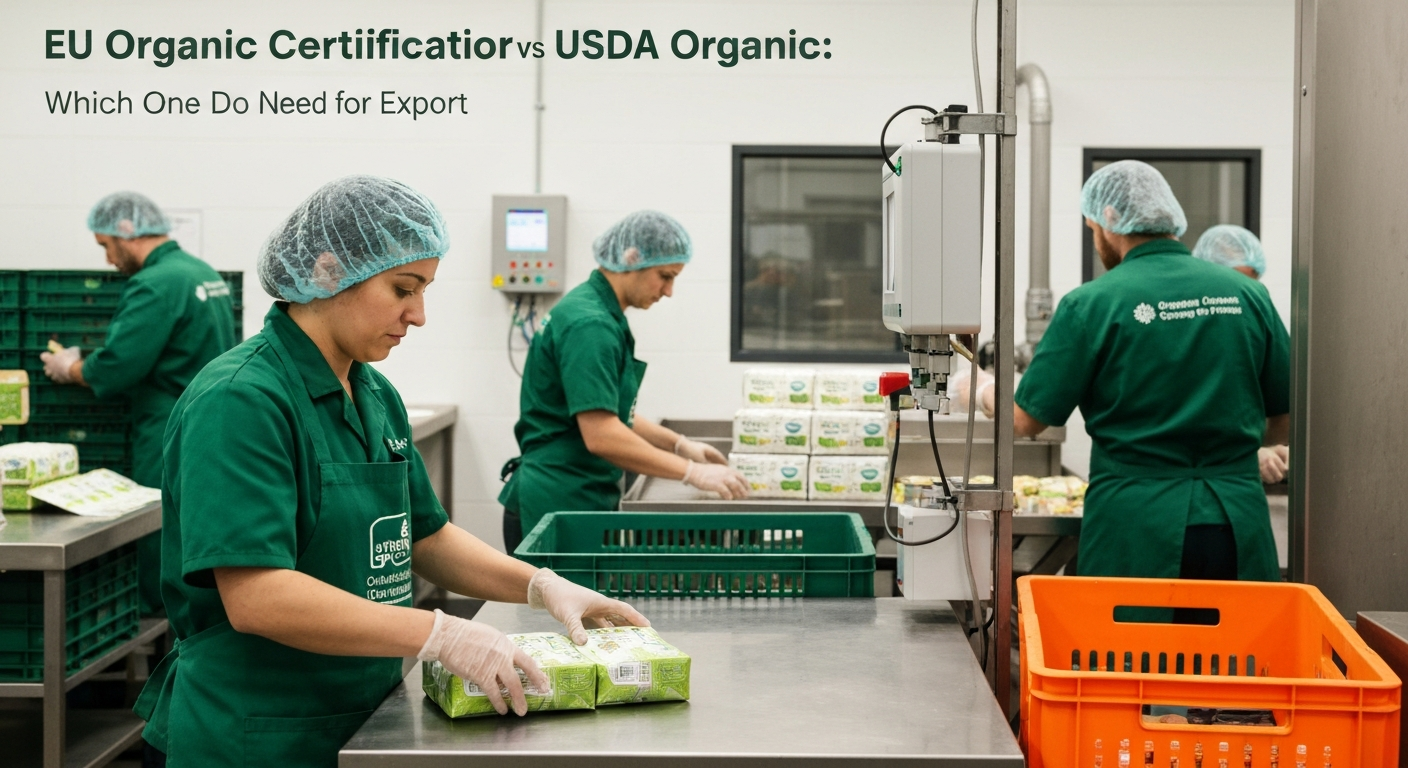
What is EU Organic Certification vs USDA Organic: Which One Do You Need for Export??
Finding the right organic certification for your products can be crucial if you're looking to export to international markets. With the rising demand for organic foods globally, understanding whether you need EU Organic or USDA Organic certification can save you from costly delays and rejections.
Finding the right organic certification for your products can be crucial if you're looking to export to international markets. With the rising demand for organic foods globally, understanding whether you need EU Organic or USDA Organic certification can save you from costly delays and rejections. Let's break it down.
This guide will help you choose the right certification for your food products by comparing EU and USDA organic standards across produce, grains, dairy, meat, and processed foods. We'll also provide a decision flowchart and evaluate when dual certification might be worth the investment.
Understanding EU vs USDA Organic Standards
Key Differences
Before you choose a certification, it’s important to know the core differences between EU and USDA standards for five common export categories:
| Category | EU Organic Standards | USDA Organic Standards |
|---|---|---|
| Produce | No synthetic pesticides or herbicides; strict crop rotation and biodiversity rules. | No synthetic pesticides; allows some non-organic inputs, making practices more flexible. |
| Grains | Requires soil fertility practices; restrictions on certain fertilizers. | Similar standards, with some leeway in soil amendments; allowed inputs may differ. |
| Dairy | Organic feed, outdoor access, specific animal welfare standards; unannounced inspections required. | Organic feed and outdoor access required; animal welfare varies by certifier. |
| Meat | Must come from animals raised organically; no antibiotics or growth hormones; strict welfare protocols. | Similar standards but different regulations for feed additives. |
| Processed Foods | Must contain at least 95% organic ingredients; strict labeling rules. | Requires at least 95% organic ingredients; some non-organic ingredients may be allowed. |
Key Takeaways
- Produce: EU standards are stricter on pesticides and biodiversity.
- Grains: Both systems are similar, but EU has tougher fertilizer rules.
- Dairy: EU mandates unannounced inspections; USDA is more flexible.
- Meat: Both require strict welfare protocols, but feed regulations differ.
- Processed Foods: Both need 95% organic ingredients, yet EU is stricter on labeling.
A Flowchart to Match Your Product with Certification
Use this decision flowchart to determine which certification fits your product type, target markets, and business goals.
- Identify Your Product Type: Is it produce, grains, dairy, meat, or processed foods?
- Determine Your Target Market: Are you exporting to the EU, USA, or both?
- Evaluate Your Business Goals: Are you focusing on maximizing market access or minimizing costs?
Key Takeaways
- Product Type: Directly impacts certification choice.
- Target Market: EU markets typically need EU certification, while the USA accepts USDA.
- Business Goals: Weigh long-term market access against short-term costs.
Cost-Benefit Analysis of Dual Certification
Now that you understand the certifications better, let's evaluate the financial implications of dual certification versus a single standard.
When Dual Certification Makes Sense
- Market Demand: Targeting both EU and US markets can increase sales potential.
- Consumer Trust: Both certifications can enhance brand credibility, especially in premium segments.
When to Focus on One Certification
- Cost Efficiency: If your primary market is one region (e.g., the EU), focus on EU certification to save money.
- Compliance Complexity: Dual certification requires managing two sets of regulations, which is time-consuming and costly.
Cost Estimates
- Single Certification: £1,000 to £5,000 annually.
- Dual Certification: £5,000 to £15,000, depending on your supply chain and product type.
Key Takeaways
- Dual Certification: Ideal for businesses targeting multiple markets.
- Single Certification: More cost-effective for businesses focusing on a specific region.
Common Questions (FAQ)
Q: What is the impact of the EU's new regulations on US exporters?
A: Starting in 2025, US exporters must fully comply with EU organic regulations to use the EU logo, requiring significant production practice adjustments. Learn more about the EU's new regulations.
Q: Can I sell my USDA organic certified products in the EU?
A: Yes, but USDA organic products can’t display the EU organic logo unless they meet all EU standards. Read about the U.S. – EU Organic Equivalency Arrangement.
Q: What are the consequences of non-compliance?
A: Non-compliance can lead to penalties, loss of certification, and restricted market access. Staying informed about regulations is crucial. Explore the impacts of non-compliance.
Q: How do I choose the right certifier?
A: Look for accredited certifiers familiar with both USDA and EU standards, considering their reputation and support level. Check this guide on importing and exporting organic products.
Q: What are the costs associated with organic certification?
A: Costs vary widely based on product type and market focus, ranging from £1,000 to £15,000 annually for certification and compliance. See a detailed breakdown of organic certification costs.
Conclusion: Choose Wisely for Successful Exports
Understanding the differences between EU and USDA standards, using structured decision-making, and conducting a thorough cost-benefit analysis can help you choose the right certification to align with your export goals. The regulatory landscape is evolving, and adapting now will strengthen your business. Embrace these changes to unlock new opportunities in the organic market. Ready to take the next step?
Explore our guide on EU Organic Certification requirements and check out our exhibitor search to connect with potential partners in the organic food sector.
Meta Title: EU vs USDA Organic Certification: Which Do You Need?
Meta Description: Discover the differences between EU and USDA organic certifications, and choose the right one for your export needs. With this guide, you're now equipped to make an informed decision for navigating organic certification.
About the Author

Jean-Marc Koffi, Export Specialist & AfCFTA Trade Facilitator. With over 14 years of experience exporting mangoes, cocoa, coffee, and cashews from West Africa to EU, Middle East, and North American markets, Jean-Marc helps African SMEs build reliable export pipelines under AfCFTA.
Frequently asked questions
What is the impact of the EU’s new regulations on US exporters?
Can I sell my USDA organic certified products in the EU?
What are the consequences of non-compliance?
How do I choose the right certifier?
What are the costs associated with organic certification?
Quick facts
Published: 3/6/2026
Reading time: 5 min
Written by

Jean Marc Koffi
Co-authorJournalist & Export SpecialistLondon
Jean Marc Koffi is an MBA-trained trade specialist who connects African exporters to global buyers, with over $20M in contracts facilitated and expertise recognized by major trade organizations. Noted for rapid buyer network building, he is an experienced speaker and certified in trade facilitation, origin rules, and food safety.

Alocha Massamba
Co-authorFounder, Epifresh & FoodExpoConnectLondon
Alocha Massamba is the founder of Epifresh and FoodExpoConnect. He builds the technology, data and partnerships that connect African food producers and exporters to international buyers — with a focus on fresh-produce supply chains, cold-chain logistics, and the buyer-discovery platforms small and mid-size exporters need to compete with global incumbents.
Series
More in Compliance Deadlines 2026
EUDR Compliance 2026: What the Deforestation Regulation Means for Food Exporters (Deadline + Checklist)
The EU Deforestation Regulation enforcement deadline is December 2026. A May 2026 simplification package cut compliance costs by 75%. Here's what coffee, cocoa, palm oil, and soy exporters need to do now.
How to Get HACCP Certification for Food Export: Step-by-Step Guide 2026
Have you ever wondered what it takes for a small coffee exporter to thrive in a competitive global market? Picture this: a bustling warehouse filled with the aroma of freshly roasted beans, ready to ship to discerning buyers in Europe who demand high food safety standards. For many exporters, ach...

How to Export Organic Products: Certification, Markets & Pricing Premium Guide 2026
Learn how to obtain organic certification, identify lucrative export markets, and implement premium pricing strategies to boost your organic product revenue by 15-30% in 2026.
Explore more export intelligence
Certification • Pricing Strategy • Market Access
5 Certifications Worth More Than a Price Cut in 2026
Stop competing on price. Organic, Fair Trade, Rainforest Alliance, B Corp, and SQF certifications can command 20-300% price premiums for African food exporters in 2026. Here is the ROI data for each.
Coffee Export • Market Access • EU Regulations
Coffee Export 2026: African Origins, Fair Trade Pricing & EU Market Access
Complete guide to coffee export from Ethiopia, Kenya and Rwanda — EUDR compliance, fair trade pricing, certification requirements, and how to access €12-18/kg EU buyer contracts in 2026.
Market Access • Africa Trade • Export Strategy
China Zero-Tariff Policy for African Food Exporters: Coffee Imports Surge 145.7% — How to Enter the World's Largest Market Duty-Free
China's zero-tariff policy covering 53 African countries is already producing dramatic results — coffee imports surged 145.7% in the first five months. How food exporters can access this duty-free window and bypass traditional tariff barriers.