
FoodExpoConnect Blog
SeriesQ2 2026 Logistics SeriesHow the Middle East Conflict Is Disrupting Global Food Trade: What Every Exporter Must Know in 2026
The 2026 Iran war and Strait of Hormuz closure have shattered global shipping routes, spiked freight costs by 300%, and triggered a fertiliser crisis. Here is what food exporters need to do right now.
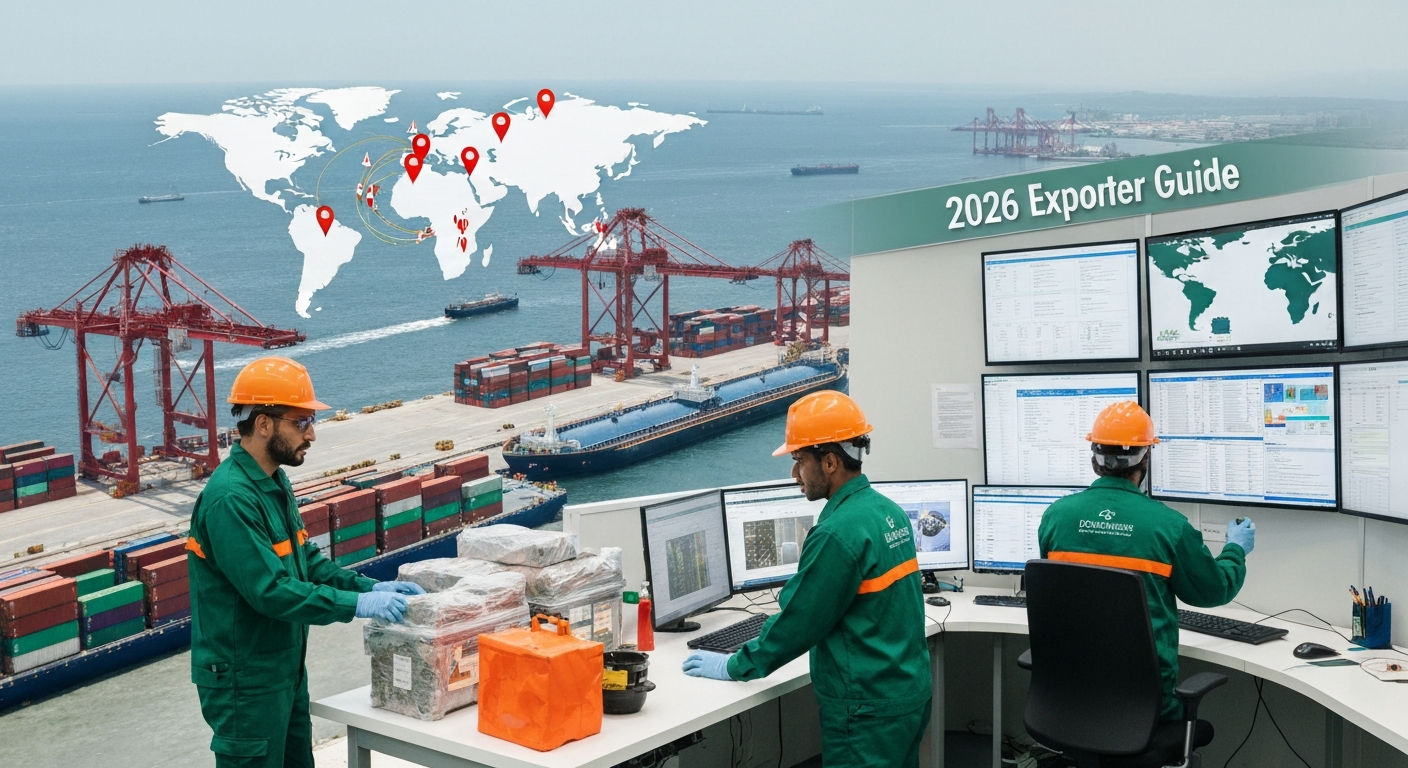
How is the Middle East conflict affecting global food trade in 2026?
The 2026 Iran war triggered the closure of the Strait of Hormuz, cutting off 20% of global oil, 25% of nitrogen fertiliser trade, and critical food commodity routes. Freight costs have surged 300%, transit times doubled, and exporters face war-risk surcharges of $3,000-$4,000 per container.
On 28 February 2026, the United States and Israel launched coordinated airstrikes on Iran under Operation Epic Fury. Within days, Iran's Islamic Revolutionary Guard Corps closed the Strait of Hormuz to commercial shipping. The fallout has been immediate and severe: tanker traffic dropped to near zero, carriers suspended bookings, and global food supply chains are now being redrawn in real time.
If you export food products, whether fresh produce from East Africa, processed goods from South Asia, or grains from Latin America, you are already feeling the effects. This guide breaks down exactly what is happening, which commodities are at risk, and what you should do right now to protect your business.
The Three Chokepoints Under Threat
The Middle East conflict has effectively shut down or severely disrupted three of the world's most critical maritime trade corridors simultaneously:
1. Strait of Hormuz: Effectively Closed
The Strait of Hormuz gives passage to one-fifth of the world's oil supply, 20% of global LNG shipments, and approximately 25% of globally traded nitrogen fertiliser. After Iran's IRGC prohibited vessel passage, tanker traffic dropped roughly 70% within 48 hours before falling to near zero.
Maersk has suspended all vessel crossings through the strait, including all reefer and dangerous cargo shipments in and out of multiple Middle Eastern countries. Hapag-Lloyd and CMA CGM followed with similar suspensions.
2. Red Sea and Suez Canal: Disrupted Again
The Houthi threat never fully went away. After a period of relative calm from November 2025, the Houthis threatened to resume attacks in response to the Iran war on 28 February 2026. This compounds the existing Red Sea crisis that had already forced 95% of container ships to reroute around Africa during the 2024-2025 escalation.
With both the Suez and Hormuz corridors now compromised, vessels have no choice but to take the Cape of Good Hope route, adding approximately 3,500 nautical miles and roughly $1 million in fuel costs per voyage.
3. Persian Gulf Ports: Grounded
Nearly 170 container ships have been trapped in or near Middle Eastern ports, halting movement of critical food supplies. Major shipping companies including Maersk, CMA CGM, and MSC have suspended all bookings for cargo to the Middle East region.
What This Means for Food Commodity Markets
The disruption is hitting food supply chains through three simultaneous pressure points: energy costs, fertiliser availability, and direct shipping routes for food commodities.
The Fertiliser Crisis
This is arguably the most consequential long-term threat to global food security. Approximately 33% of the world's fertiliser supply transits the Strait of Hormuz. Qatar, Saudi Arabia, Oman, the UAE, and Iran are all major exporters of nitrogen products, especially urea.
QatarEnergy has halted urea, ammonia, methanol, and related output following Iranian drone strikes on its facilities. Unlike oil, there is no strategic fertiliser reserve to cushion supply shocks. The timing is particularly damaging: this disruption arrives just ahead of Northern Hemisphere spring planting, potentially triggering crop yield drops for late 2026 and food price spikes into 2027.
Grain and Oilseed Markets
Wheat futures have already responded. CBOT SRW wheat increased to 574 US cents per bushel from 542 two weeks prior, while Euronext milling wheat rose to EUR 193 per tonne. Red Sea and Suez disruptions are hindering flows of wheat, soymeal, palm oil, and sunflower oil, all major components of global food security.
Approximately 20% of global palm oil supply transits the Strait of Hormuz, with Gulf Cooperation Council states collectively importing around 5 million tonnes of vegetable oils per year, volumes now facing either significant delay or sharply elevated freight costs.
Perishable Food Exports
More than 400,000 metric tonnes of basmati rice grown in India for export are stuck at Indian ports or in transit. Roughly 75% of India's annual basmati rice exports go to the Middle East.
Refrigerated container transport is becoming more expensive as energy price spikes increase the cost of refrigeration, cold storage, and food processing across the entire chain.
How African Food Exporters Are Being Hit
African food exporters are facing a particularly severe impact. The disruption coincides with East Africa's avocado export season, and the effects are cascading:
- Transit times nearly doubling: Shipping from Mombasa to European ports via the Red Sea typically takes 18-20 days. Via the Cape of Good Hope, it now takes up to 45 days.
- Reefer bookings suspended: CMA CGM's suspension of all reefer bookings to the Middle East signals an impending bottleneck for temperature-sensitive cargo.
- Container surcharges: War-risk surcharges of $3,000-$4,000 per container are being imposed on top of already elevated freight rates.
- Spoilage and rejection risk: Extended transit times for perishable goods like fresh fruit, vegetables, and dairy are leading to higher rejection rates by European and Gulf buyers.
- Port congestion: East African ports like Mombasa face delayed inbound shipments of machinery, grain, and edible oils, pushing up landed costs and feeding domestic inflation.
South African red meat exports to the Middle East have also been caught up in the disruption, with shipments grounded and new bookings impossible to secure for Gulf destinations.
The Broader Economic Ripple Effects
The consequences extend well beyond shipping routes:
- EU inflation: Consumer price inflation in the European Union could rise by more than a percentage point if the conflict drags on for several months, with up to half a percentage point shaved off economic growth.
- Energy-food nexus: Oil prices are expected to increase by nearly 20%, which directly feeds into food production costs through transport, packaging, cold storage, and processing.
- Regional food insecurity: The Middle East imports 85% of its food. With supply chains severed, the region faces mounting food security concerns, compounding the humanitarian crisis.
What Food Exporters Should Do Right Now
1. Diversify Shipping Routes and Carriers
Do not rely on a single carrier or route. Engage at least two to three freight forwarders and explore multimodal transport options. For high-value perishables, evaluate air freight as an interim solution despite the premium cost. Check our guide on 7 best freight forwarders for African food exporters for vetted options.
2. Renegotiate Incoterms and Contracts
If you are selling on CIF or DDP terms, the cost increase falls on you. Consider renegotiating to FOB or FCA terms to shift shipping risk to buyers. At minimum, add force majeure clauses covering geopolitical disruptions and include freight adjustment mechanisms in new contracts.
3. Secure Forward Contracts on Inputs
Fertiliser prices are set to spike. If your products depend on agricultural inputs, lock in forward contracts now before the full impact materialises. The same applies to packaging materials derived from petrochemicals.
4. Build Safety Stock Buffers
Extend your safety stock from the typical 15-20 days to 30-45 days. This applies both to raw materials for production and finished goods ready for export. The additional working capital cost is significantly less than lost contracts from delayed shipments.
5. Explore Alternative Markets
If your primary export destination is the Middle East, begin prospecting buyers in markets not directly affected by the chokepoint closures. European, East Asian, and North American markets remain accessible via Atlantic and Pacific routes. Use tools like FoodExpoConnect's AI-powered buyer search to identify new prospects quickly.
6. Monitor Developments Daily
The situation is evolving rapidly. Subscribe to Global Cold Chain Alliance situation reports and monitor freight rate indices. Join industry associations that provide real-time trade alerts.
7. Review Insurance Coverage
Ensure your marine cargo insurance explicitly covers war-risk scenarios, including spoilage from extended transit times caused by route diversions. Many standard policies exclude war zones, and premiums for Middle East coverage have already surged.
Timeline: How We Got Here
| Date | Event | Impact |
|---|---|---|
| Oct 2023 | Houthi attacks begin in Red Sea | 30% of global container trade via Suez disrupted |
| Mid-2024 | Red Sea crisis peak | 95% of container ships rerouted around Africa |
| Oct 2025 | Gaza ceasefire reached | Houthi attacks pause, partial normalisation |
| Nov 2025 - Feb 2026 | Relative calm | Some shipping returns to Red Sea routes |
| 28 Feb 2026 | US-Israel strike Iran (Operation Epic Fury) | Iran closes Strait of Hormuz; Houthis threaten Red Sea resumption |
| 1-5 Mar 2026 | Hormuz traffic drops to zero | Carriers suspend Middle East bookings; 170+ ships trapped |
Looking Ahead: Scenarios for Food Exporters
Short conflict (resolved within weeks): Freight rates remain elevated for 2-3 months. Perishable exporters face one lost season. Fertiliser impact limited.
Medium duration (3-6 months): Significant fertiliser shortages hit Northern Hemisphere harvests. Food commodity prices rise 15-25%. African and South Asian exporters lose market share to competitors with shorter supply chains.
Prolonged conflict (6+ months): Global food price crisis comparable to 2022 post-Ukraine. Structural shift in shipping routes becomes permanent. Exporters without diversified logistics networks face existential risk.
Conclusion
The Middle East conflict of 2026 is not merely a regional security crisis. It is a food trade crisis with global reach. The simultaneous disruption of the Strait of Hormuz and Red Sea routes, combined with the fertiliser supply shock, creates a triple threat that no food exporter can afford to ignore.
The exporters who act now to diversify routes, renegotiate terms, and secure inputs will be the ones who survive and even gain market share as competitors falter. The time to act is not when your next shipment is stuck. It is today.
For real-time exhibitor data and buyer contacts across global food trade shows, try FoodExpoConnect's AI-powered search. Find verified importers, exporters, and distributors in seconds.
Frequently asked questions
How has the Strait of Hormuz closure affected food shipping?
What food commodities are most affected by the Middle East conflict?
How are African food exporters impacted?
What should food exporters do to mitigate the impact?
Will food prices rise due to the Middle East conflict?
Quick facts
Published: 3/6/2026
Reading time: 8 min
Pillars: export-success
Written by

Jean Marc Koffi
Co-authorJournalist & Export SpecialistLondon
Jean Marc Koffi is an MBA-trained trade specialist who connects African exporters to global buyers, with over $20M in contracts facilitated and expertise recognized by major trade organizations. Noted for rapid buyer network building, he is an experienced speaker and certified in trade facilitation, origin rules, and food safety.

Alocha Massamba
Co-authorFounder, Epifresh & FoodExpoConnectLondon
Alocha Massamba is the founder of Epifresh and FoodExpoConnect. He builds the technology, data and partnerships that connect African food producers and exporters to international buyers — with a focus on fresh-produce supply chains, cold-chain logistics, and the buyer-discovery platforms small and mid-size exporters need to compete with global incumbents.
Series
More in Q2 2026 Logistics Series

Ocean Freight Q2 2026: Why Container Rates Are Dropping on Some Routes and Surging on Others
A tale of two shipping markets: transpacific rates have collapsed 70% from their 2022 peak while Asia-Europe spot rates surge 40% on Iran disruption. Here's what it means for food exporters and how to route around the volatility.
Container Shipping Rates Q2 2026: What Food Exporters Need to Know About Falling Freight Costs, Blank Sailings, and the Suez Return
Container rates have dropped 70% from pandemic peaks, Suez transits are resuming, and fleet overcapacity is 3-5%. But the rate bottom may be short-lived. Here's how food exporters should position their logistics strategy for Q2-Q3 2026.
How the Red Sea Crisis Is Reshaping Global Food Export Routes in 2026: What Every Exporter Must Know
The Red Sea shipping crisis is adding $1,500 per container and 14 extra days to food export routes. Here's how smart exporters are adapting their logistics, insurance, and buyer relationships.
Explore more export intelligence
Certification • Pricing Strategy • Market Access
5 Certifications Worth More Than a Price Cut in 2026
Stop competing on price. Organic, Fair Trade, Rainforest Alliance, B Corp, and SQF certifications can command 20-300% price premiums for African food exporters in 2026. Here is the ROI data for each.
Coffee Export • Market Access • EU Regulations
Coffee Export 2026: African Origins, Fair Trade Pricing & EU Market Access
Complete guide to coffee export from Ethiopia, Kenya and Rwanda — EUDR compliance, fair trade pricing, certification requirements, and how to access €12-18/kg EU buyer contracts in 2026.
Market Access • Africa Trade • Export Strategy
China Zero-Tariff Policy for African Food Exporters: Coffee Imports Surge 145.7% — How to Enter the World's Largest Market Duty-Free
China's zero-tariff policy covering 53 African countries is already producing dramatic results — coffee imports surged 145.7% in the first five months. How food exporters can access this duty-free window and bypass traditional tariff barriers.