
FoodExpoConnect Blog
Trade Show ROI Calculator 2026: Is Attending Global Food Exhibitions Worth $15,000 for Small Exporters from Emerging Markets?
Calculate if attending global food trade shows is worth the investment for small exporters. Break-even analysis, conversion benchmarks, and ROI strategies for emerging market businesses.
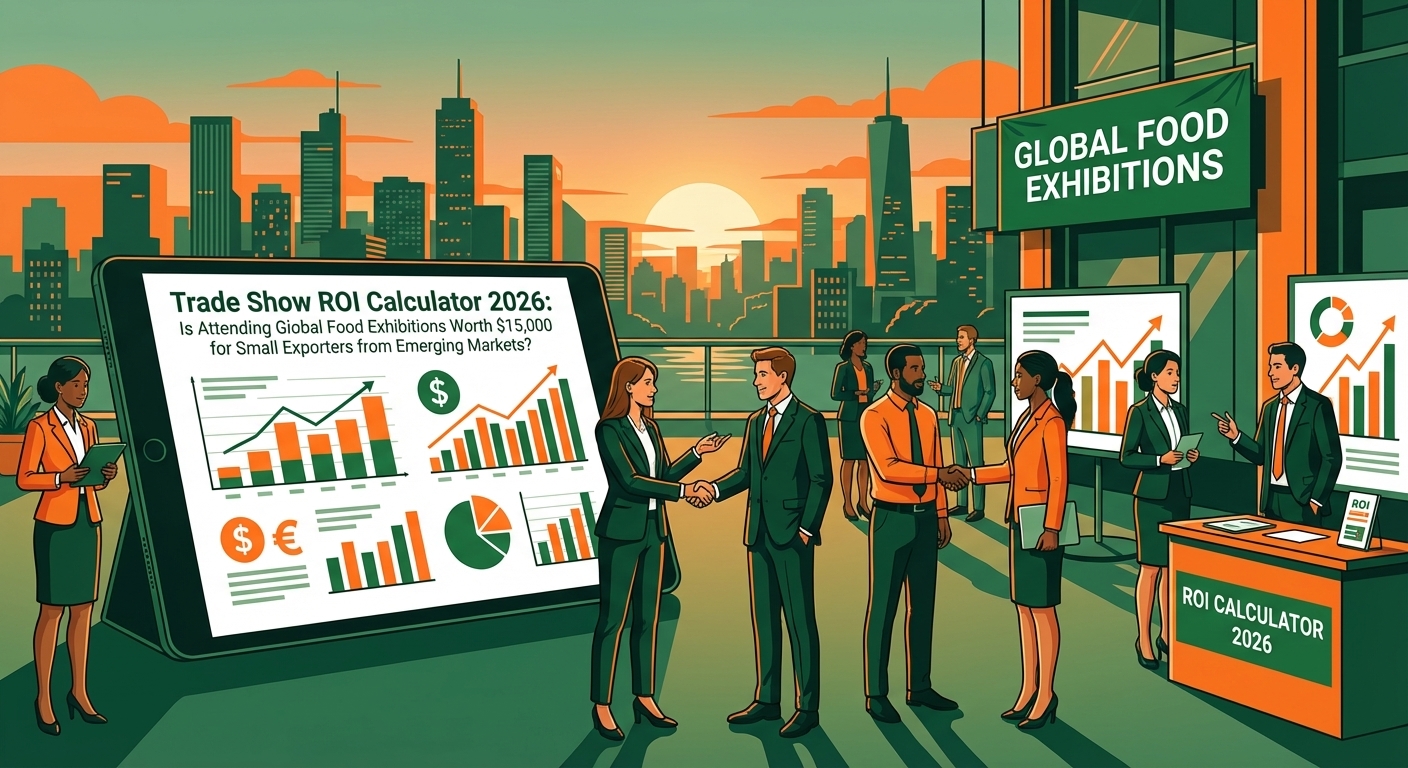
How many buyers do I need at a trade show to break even?
To break even on a $15,000 trade show investment, you need approximately 12-15 new buyers (assuming $1,500 average order value and 30% profit margin). This equals roughly $450 profit per sale requiring 34 sales to break even.
Have you ever stood at a trade show, surrounded by the aroma of exotic spices and the vibrant energy of eager buyers and sellers, only to wonder if all this investment is really worth it? You’re not alone. Small exporters, especially from emerging markets, often grapple with justifying the cost of participating in these global food exhibitions. But here's the thing: attending a trade show can generate significant returns, and knowing exactly how to calculate your potential ROI is key to making that leap.
In this guide, we'll walk you through a practical calculator that reveals how many new buyers you need to secure at a $15,000 trade show to break even—and even achieve a 200% ROI within just 12 months. By the end, you'll have a clear understanding of your break-even point, realistic conversion rate benchmarks, and an actionable pre-show checklist to maximize your lead generation. Ready to transform your trade show experience? Let's dive in.
Quick answer (so you can decide fast)
If you invest $15,000 and your profit per order is $450 (example: $1,500 AOV at 30% margin), you need roughly:
Break-even sales = Total investment ÷ Profit per sale
Break-even sales = $15,000 ÷ $450 ≈ 34 sales
If each new buyer places ~3 orders in the next 12 months, that’s about 11–12 buyers to break even.
Step 1: Calculating Your Break-Even Point
How to Determine Your Break-Even Point
Understanding your break-even point is essential. This is the point at which your total revenue equals your total costs, meaning you’re not losing money. Here’s a step-by-step guide to calculating it based on your average order value and profit margin.
-
Identify Your Average Order Value (AOV):
This is the average amount a buyer spends on your products. For example, if your AOV is $1,500, that’s your starting point. -
Calculate Your Profit Margin: To find your profit margin, subtract your total costs from your revenue, divide by your revenue, and multiply by 100. If your profit margin is 30%, this means you keep $450 from each $1,500 sale.
Export Profitability Modeler
Interactive Net Margin & ROI Calculator
Net Profit Margin
30%💡 Pro Tip: For African food exports, target a 25%+ net margin to absorb currency fluctuations and shipping delays. If you are below 20%, focus on "Value Addition" (processing/packaging) rather than raw commodity exports.
-
Calculate Your Break-Even Point:
Use the following formula:
Break-even sales = Total investment ÷ Profit per saleFor example, if you invest $15,000 and your profit per sale is $450: Break-even sales = $15,000 ÷ $450 ≈ 33.33 (round up to 34 sales)
You'll need to secure approximately 12 new buyers at the trade show to break even.
Key Takeaway
- Know your numbers: Your average order value and profit margin are critical for determining how many buyers you need at the show.
Step 2: Realistic Conversion Rate Benchmarks
Understanding Conversion Rates for Small Exporters
Conversion rates can vary widely, but for small exporters from emerging markets, the average conversion rate at trade shows hovers around 10-15%. This means that for every 100 leads you gather, you can realistically expect 10-15 to convert into paying customers.
-
Benchmark Data:
According to industry insights, small exporters often find that engaging with around 200 leads can yield 20-30 new customers, especially when they effectively follow up after the show. Trade Show ROI: Calculating Return On Investment for Events provides further insights into these benchmarks. -
Follow-Up Strategy:
Following up within a week of the event can significantly increase your conversion rates. Personalized emails or calls can help you stand out and keep your brand top of mind.
Key Takeaway
- Aim for realistic conversion rates: Focus on generating quality leads and effective follow-up strategies to maximize your chances of converting leads into sales.
Step 3: Pre-Show Preparation Checklist
Actionable Checklist to Triple Your Qualified Lead Generation
Now that you understand your break-even point and potential conversion rates, let’s focus on how you can prepare before the show to ensure you get the most out of your investment. Here’s a checklist to help you maximize lead generation:
-
Define Your Target Audience:
Who are you trying to reach? Be specific about the demographics and needs of your ideal buyers. -
Create an Engaging Booth:
Invest in eye-catching displays and informative materials that highlight your unique selling propositions. Make sure to include sustainability practices, as consumers are increasingly focused on ethically sourced products. -
Pre-Event Marketing:
Leverage social media and email campaigns to inform potential attendees about your participation. Consider offering incentives for visiting your booth. -
Schedule Meetings in Advance:
Use platforms like LinkedIn to connect with potential buyers before the event. Setting appointments can help you maximize your time at the show. -
Prepare Your Sales Team:
Equip your team with talking points and FAQs. Make sure they understand your products inside out and can confidently address potential customers’ questions. -
Collect Leads Effectively:
Use digital tools to collect leads easily. Consider using QR codes or lead retrieval apps to streamline the process.
Key Takeaway
- Preparation is key: A well-thought-out plan before the trade show can significantly increase your chances of generating qualified leads.
Conclusion
Attending global food exhibitions can be a game-changer for small exporters from emerging markets. By understanding how to calculate your break-even point, setting realistic conversion rate benchmarks, and preparing effectively, you can transform your trade show experience into a profitable venture.
Get your Trade Show ROI Report (Free)
Enter your trade show budget and assumptions, then download a report with:
- Break-even targets (buyers, deals, leads)
- Cost-per-lead benchmarks
- Actionable recommendations for improving ROI
For more insights, explore our exhibitor directory: https://www.foodexpoconnect.com/en/exhibitors
Frequently asked questions
How do I measure the ROI of attending a trade show?
What is a realistic conversion rate at food trade shows?
What if I don't reach my break-even point?
Can small exporters compete at large trade shows?
How can I ensure follow-up success?
Are virtual trade shows a cheaper alternative?
Which global food exhibitions offer the best ROI for emerging markets?
What are the current trends in global food exports?
Quick facts
Published: 12/11/2025
Reading time: 6 min
Pillars: market-entry, business-strategy
Written by

Jean Marc Koffi
Co-authorJournalist & Export SpecialistLondon
Jean Marc Koffi is an MBA-trained trade specialist who connects African exporters to global buyers, with over $20M in contracts facilitated and expertise recognized by major trade organizations. Noted for rapid buyer network building, he is an experienced speaker and certified in trade facilitation, origin rules, and food safety.

Alocha Massamba
Co-authorFounder, Epifresh & FoodExpoConnectLondon
Alocha Massamba is the founder of Epifresh and FoodExpoConnect. He builds the technology, data and partnerships that connect African food producers and exporters to international buyers — with a focus on fresh-produce supply chains, cold-chain logistics, and the buyer-discovery platforms small and mid-size exporters need to compete with global incumbents.
Explore more export intelligence
Certification • Pricing Strategy • Market Access
5 Certifications Worth More Than a Price Cut in 2026
Stop competing on price. Organic, Fair Trade, Rainforest Alliance, B Corp, and SQF certifications can command 20-300% price premiums for African food exporters in 2026. Here is the ROI data for each.
Coffee Export • Market Access • EU Regulations
Coffee Export 2026: African Origins, Fair Trade Pricing & EU Market Access
Complete guide to coffee export from Ethiopia, Kenya and Rwanda — EUDR compliance, fair trade pricing, certification requirements, and how to access €12-18/kg EU buyer contracts in 2026.
Market Access • Africa Trade • Export Strategy
China Zero-Tariff Policy for African Food Exporters: Coffee Imports Surge 145.7% — How to Enter the World's Largest Market Duty-Free
China's zero-tariff policy covering 53 African countries is already producing dramatic results — coffee imports surged 145.7% in the first five months. How food exporters can access this duty-free window and bypass traditional tariff barriers.