
FoodExpoConnect Blog
Trade Show ROI Calculator: Is Attending Fruit Logistica Worth $15,000?
Calculate the true ROI of attending Fruit Logistica with our cost breakdown, revenue projections, and intangible benefits framework to determine if the investment is justified.
What is Trade Show ROI Calculator: Is Attending Fruit Logistica Worth $15,000??
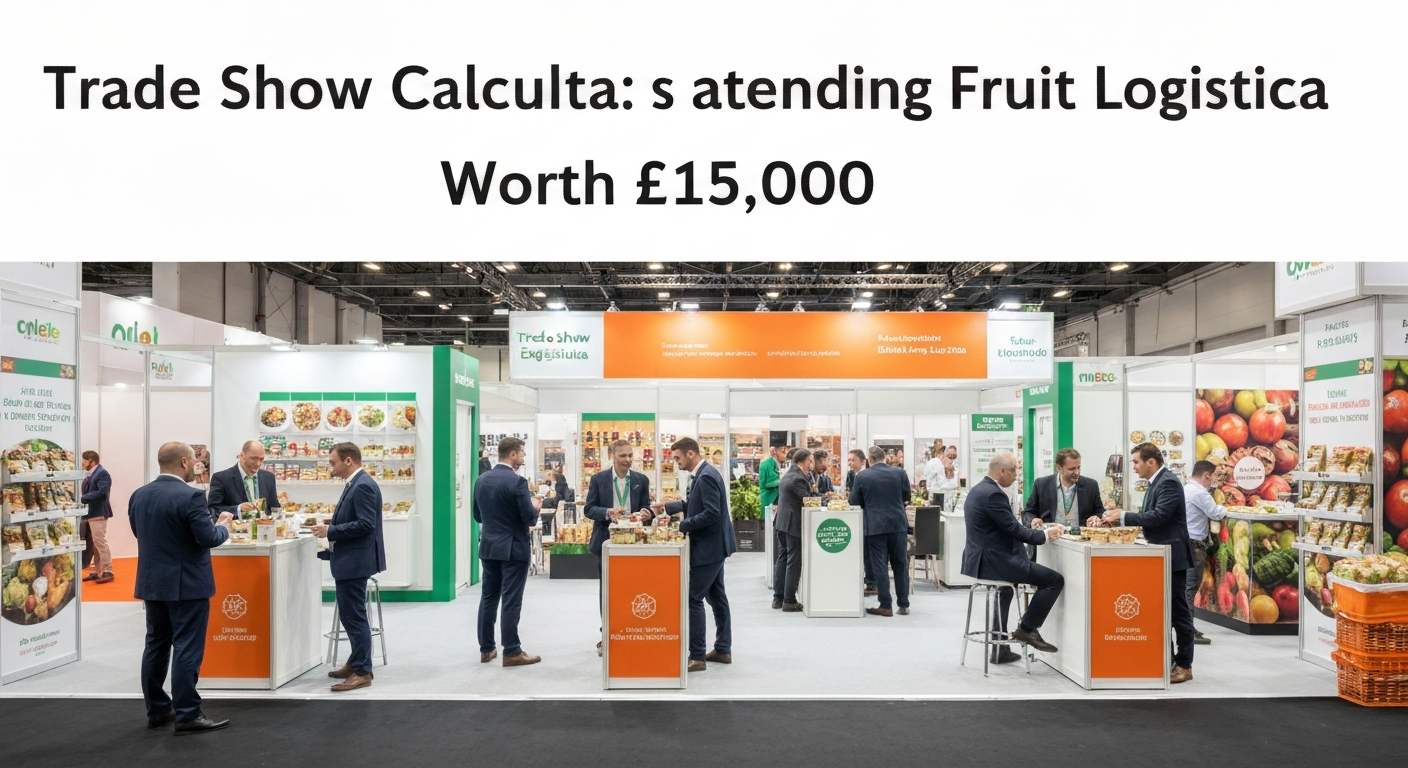
Imagine you're at Fruit Logistica, surrounded by vibrant produce and a bustling crowd. As one of the top trade shows for the food export industry, it offers exciting business opportunities.
Imagine you're at Fruit Logistica, surrounded by vibrant produce and a bustling crowd. As one of the top trade shows for the food export industry, it offers exciting business opportunities. However, before you make the trip, you need to determine if the £15,000 investment is justified. This guide breaks down how to calculate costs, potential revenue, and intangible benefits to assess if attending is a smart move for your company.
1. Calculate Your Exact Attendance Costs
What Costs Should You Include?
Evaluating your commitment to Fruit Logistica means looking beyond just the booth fee. Consider the following expenses:
- Booth Fee: Calculate the cost of your exhibition space. For example, at €216 per square metre, costs can quickly rise. You can use the Stand Rental Calculator provided by Fruit Logistica for accurate estimates.
- Travel Expenses: Include flights, accommodation, and local transportation. A round trip from London to Berlin might cost £150-£300, depending on timing.
- Samples and Marketing Materials: Budget for showcasing products with samples, brochures, and business cards, which might range from £500 to £1,500.
- Staff Time: Factor in the opportunity cost of your team being away from their regular duties. If three staff members spend three days at the event, it can add significant costs, especially with per diem rates.
Here's a formula to calculate total attendance costs:
Total Attendance Cost = Booth Fee + Travel Expenses + Samples + Staff Time + Marketing
Being thorough helps avoid unexpected financial surprises.
2. Quantify Potential Revenue from Qualified Leads
How Can You Measure Expected Revenue?
To decide if you can generate at least £15,000 in new business or savings, quantify potential revenue from qualified leads. Follow these steps:
-
Estimate Lead Generation: Use data from past shows to estimate lead numbers. If you typically generate 50 leads per show and have a 20% conversion rate, you'll have 10 potential sales.
-
Calculate Average Deal Sizes: With an average deal size of £5,000, project your revenue. For 10 leads:
- Projected Revenue = Number of Leads x Average Deal Size
- Projected Revenue = 10 x £5,000 = £50,000
-
Industry Conversion Rates: Trade show leads usually convert at around 20%. So, for every five leads, one sale typically results. This information is supported by insights from Trade Show ROI studies.
These figures help you confidently estimate potential revenue, though actual results may vary based on industry segment, lead quality, and follow-up strategies.
3. Measure Intangible Benefits
What Intangible Benefits Should You Consider?
Tangible ROI is essential, but don't overlook intangible benefits from attending trade shows like Fruit Logistica:
- Competitor Intelligence: Learn from competitors to avoid costly mistakes and improve market positioning. Assign a hypothetical value of £2,000.
- Supplier Negotiations: Use the show to negotiate better terms with suppliers. Estimate savings based on past negotiations.
- Market Trend Insights: Discover emerging trends and consumer preferences. For instance, rising demand for organic produce could lead to strategic pivots and increased sales. Insights into market trends can be found in reports from Fresh Market.
Assign financial values to these benefits. For example, competitor intelligence at £2,000, supplier negotiation savings at £3,000, and market insights leading to an additional £5,000 in revenue could value total intangible benefits at £10,000.
Common Questions (FAQ)
Q: How do I calculate the ROI for attending Fruit Logistica?
A: Use this formula: (Net Profit / Cost of Investment) x 100. For example, expecting £50,000 in new business on a £15,000 investment means an ROI of (50,000 - 15,000) / 15,000 x 100 = 233%.
Q: What are the hidden costs of attending trade shows?
A: Hidden costs might include staff overtime, unexpected travel expenses, and extra marketing materials. Always include a budget buffer for these contingencies.
Q: Should I attend if my company is small or mid-sized?
A: Definitely! Small and mid-sized exporters can gain significant traction through networking and lead generation at a global event like Fruit Logistica.
Q: How do I make the most of my time at the trade show?
A: Plan ahead by arranging meetings with potential clients and partners, and ensure your team is ready with presentations and product samples.
Q: What are the benefits of attending Fruit Logistica beyond sales?
A: Besides potential sales, you'll gain market insights, strengthen supplier relationships, and gather valuable competitive intelligence.
Conclusion
By calculating attendance costs, estimating potential revenue, and measuring intangible benefits, you can make an informed decision about attending Fruit Logistica. In today's geopolitical and economic climate, insights and leads from this trade show could be crucial for your business. Download our ROI Calculator Template to begin your calculations and ensure your investment yields meaningful returns. For more information on how to maximize your trade show experience, check out our guide on trade show strategy.
Key Takeaways
- Total Attendance Costs: Account for all expenses, from booth fees to staff time.
- Potential Revenue: Use industry averages to project earnings from leads.
- Intangible Benefits: Value market insights and competitor analysis.
Invest wisely, and Fruit Logistica could exceed your expectations.
About the Author
Jean-Marc Koffi, Export Specialist & AfCFTA Trade Facilitator. With over 14 years of experience exporting mangoes, cocoa, coffee, and cashews from West Africa to the EU, Middle East, and North America, Jean-Marc helps African SMEs build reliable export pipelines under AfCFTA.
Frequently asked questions
How do I calculate the ROI for attending Fruit Logistica?
What are the hidden costs of attending trade shows?
Should I attend if my company is small or mid-sized?
Quick facts
Published: 3/6/2026
Reading time: 5 min
Written by

Jean Marc Koffi
Co-authorJournalist & Export SpecialistLondon
Jean Marc Koffi is an MBA-trained trade specialist who connects African exporters to global buyers, with over $20M in contracts facilitated and expertise recognized by major trade organizations. Noted for rapid buyer network building, he is an experienced speaker and certified in trade facilitation, origin rules, and food safety.

Alocha Massamba
Co-authorFounder, Epifresh & FoodExpoConnectLondon
Alocha Massamba is the founder of Epifresh and FoodExpoConnect. He builds the technology, data and partnerships that connect African food producers and exporters to international buyers — with a focus on fresh-produce supply chains, cold-chain logistics, and the buyer-discovery platforms small and mid-size exporters need to compete with global incumbents.
Explore more export intelligence
Certification • Pricing Strategy • Market Access
5 Certifications Worth More Than a Price Cut in 2026
Stop competing on price. Organic, Fair Trade, Rainforest Alliance, B Corp, and SQF certifications can command 20-300% price premiums for African food exporters in 2026. Here is the ROI data for each.
Coffee Export • Market Access • EU Regulations
Coffee Export 2026: African Origins, Fair Trade Pricing & EU Market Access
Complete guide to coffee export from Ethiopia, Kenya and Rwanda — EUDR compliance, fair trade pricing, certification requirements, and how to access €12-18/kg EU buyer contracts in 2026.
Market Access • Africa Trade • Export Strategy
China Zero-Tariff Policy for African Food Exporters: Coffee Imports Surge 145.7% — How to Enter the World's Largest Market Duty-Free
China's zero-tariff policy covering 53 African countries is already producing dramatic results — coffee imports surged 145.7% in the first five months. How food exporters can access this duty-free window and bypass traditional tariff barriers.